30 April, 2007

The uncompleted parts of the New River Path

O traveller stay thy weary feet,
Drink of this fountain pure and sweet,
It flows for rich and poor the same.
Then go thy way remembering still
The wayside well beneath the hill
The cup of water in his name.

There are a few poems relating to water and some in particular associated with the new river. I started at the wrong end, which means I’m walking uphill, or I was today at any rate. Starting at the New River Head in Roseberry Avenue the new river is a bit of a fiction here. It has not run to the head since 1920 when the Metropolitan Water Board put their new HQ there. They built labs in 1939 and a pipe appears to run through the visible new river possibly taking water to the lab for testing. All these buildings are now, of course, luxury flats. Following the course is not too difficult as the river runs through streets up to Clissold park on large central reservations and even runs exposed through another park called New River Walk. The walk is quite flat as one would expect, first leading me up the back streets of Islington with a dad and his two sons playing with mini motos, which I thought was a bit much in the park, but aren’t they great?

The course then follows a path up Petherton Road, again under a large central reservation and there’s not much to tell until it comes up to the surface again at the Castle, an old pumping station that is now the new New River Head. The path skirts round two reservoirs and then follows the new river round to Finsbury Park. The river flows on an embankment here and it is strange to see houses below a river in this way. When I got to Finsbury Park I decided it was time to go home, although it was so flat I felt I could have walked to Amwell.
Posted by Picasa

29 April, 2007

Whistle stop tour of Manchester

Another visit to Manchester.
The inside of the Travel Inn was as adequate as they usually are.
The inside of Legends Nightclub was better than last time.
The inside of a flat in Salford was enhanced by 2 African grey parrots.
The inside of the New Century Hall was as expected.
The inside of the Coöperative Insurance Society Building was hot.
The inside of the Crown and Anchor was busy.
What the outside of these places was like, I'm not really sure.

12 April, 2007

A visit to the Peckham Conservation Area

As it's a conservation area the photographs are in black and white using Rollei Retro 400 film - a 1950s or 1960s type emulsion developed in an old fashioned Rollei developer.

Most of the buildings in the area are 19th Century houses - nice enough in their way but not much interest to me. However there are 3 excellent twentieth century buildings that are meritorious.

The first picture shows the Pioneer Health Centre, now converted into flats. Listed Grade II* it was built in 1934. Arthur Mee calls it the Glass House of Peckham, a great modern clubhouse, where the families of Peckham find every encouragement to be healthy, happy and wise. They may dance, fence, play games and swim in a blue-green bath. The debt was lifted by Lord Nuffield and Mr Meyerstein and over 1000 families had been examined when he wrote. The place is now nicely converted into luxury flats and the great floor to ceiling windows survive along with the blue-green bath.
 

R.E. Sassoon House is also listed grade II and was designed in the international style by Maxwell Fry and built for the Pioneer Housing Society in 1932 or 1934 (sources differ). Elizabeth Denby who was on the Utility Furniture Advisory Committee was also involved in the design.


St Mary Magdalene's Church was built in 1961 and is the most prominent landmark in the Street. It is on a traffic island this and its design emphasise its central importance to the community. The building was designed by Potter and Hare and St Mary Magdalene’s is a good example of their work according to the 20th Century Society. The building has a concrete frame forming a steeply pitched ribbed roof clad with copper that dominates the appearance of the building. The low walls are red brick and the church has a cruciform plan with the ridges of the nave, chancel and transepts sloping up to a central narrow spire with loudspeakers in lieu of bells - this is rather a demerit, although understandable bells are expensive, a hi-fi system isn't. 

08 April, 2007

Easter Day - Church in Harlow

Visited St Paul's Church in Harlow for the Easter Service. The church is in the 1950s style with a good sized congregation. The pulpit, painted lectern font and seating is all in the light and pleasant Festival of Britain style. The pews have heating installed as part of the structure - a good way to keep the congregation warm. I would like to take some pictures in the church but that's for another day. The church also has a mosaic mural of a haloed figure (Jesus?) with two other figures without haloes.
Here is a picture of the church

The service was traditional Evangelival Church of England with choruses and hymns, including 'Majesty', one of the few choruses I know.

The church of St Mary at Great Parndon is older and has a much more rural feel although it looks out over the Glaxo factory.

The picture shows Great Parndon Church porch.

07 April, 2007

The ford on the Chelmer

I visited Chelmsford from Harlow with Mark, travelling by bus via Old Harlow and some little villages in the Essex countryside. Chelmsford is the County Town of Essex and has the Essex County Hall and a cathedral. The diocese had its first bishop in 1914, therefore the cathedral is a former parish church rather than an ancient foundation like St Paul's or Durham. Even though it is on a rather small scale, the cathedral is attractive with a painted roof. It is also very light and airy.

The town of Chelmsford nestles between two rivers, the Chelmer and the Can, but the Chelmer gives the place its name - Chelmer's ford. The town has some good shops and a market, the highlight being the independent Chelmsford Star Coöperative Society Quadrant Department Store. There are pleasant riverside walks, and with beautiful weather, this was a good day out.

05 April, 2007

Highgate and Archway - Maundy Thursday afternoon

Maundy Thursday has come round again and therefore I, in common with all other Civil Servants, have the afternoon off. I'm never sure what to do with this jolly half day, but today I went to Archway and Highgate. Starting off at Archway Station, after the obligatory visit to the Coöp supermarket (which puts some of the others to shame) I walked up the hill past the Whittington stone where Dick Whittington heard the bells of St Mary le Bow calling him back to London. He subsequently made his fortune there as a mercer and banker, becoming Lord Mayor four times (three in the pantomime) and giving money to various charities somewhat indiscriminately.

At the top of Highgate hill is Waterlow Park, given by another Lord Mayor of London out of lands surrounding 5 Houses, including Lauderdale house, where Charles II 'entertained' Nell Gwyn, who threatened to throw her bastard first child off the roof unless the King gave him a peerage! The King begged her to save the Earl of Burford! The other dwellings included one where the poet Andrew Marvell, a friend of Milton, lived. The picture shows Lauderdale House the other houses have been demolished.

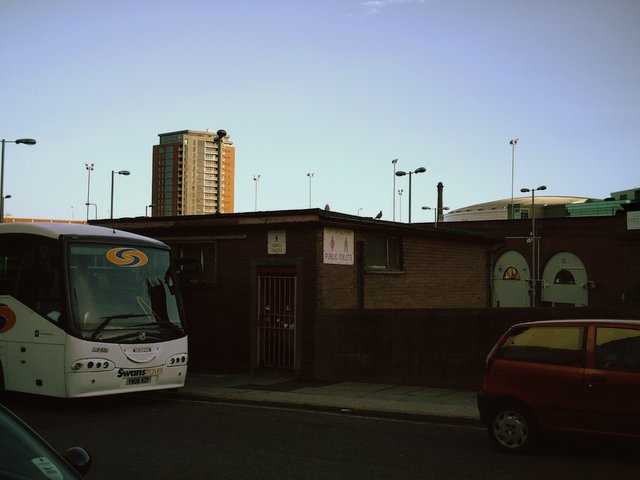
Highgate also contains the Whittington Hospital and a fusty old secondhand bookshop with everything priced at £12.50. The crusty old proprietor must love his stock so much he never wants to let it go. The other item of note, for gentlemen only was the spectacular public urinal, from the days when sanitary fittings were big.

25 March, 2007

Stratford on Avon

Another coöp weekend in Stratford on Avon, although with time off to look at King Edward VI School and the guild chapel.  
 
Posted by Picasa


The pictures show the guild chapel and almshouses which are very pleasant and olde worlde, and Falstaff who represents comedy on the Shakespeare memorial in a fairly earthily comic pose. Still not convinced that the William Shakespeare of Stratford upon Avon (who is undoubtedly real was the person who wrote the plays, but not convinced it was Francis Bacon or Christopher Marlowe either. Stratford on Avon is nice enough without this USP. Now it has a coöp store it is all the better.

05 March, 2007

Manchester - Again

A whistle stop visit to Manchester but no train delays. I saw the inside of a few shops and New Century House (including the staff shop) but nothing worth reporting. I will post the picture of the brush and shovel sculpture in one of the backstreets. There was no explanation of what it meant. Perhaps to encourage people to sweep it up.

13 February, 2007

New mission statement

This Blog now has a new mission statement. I hope you like it!

03 February, 2007

Braunston and Rugby

It's 78 miles to Braunston in the first picture but Mark, Phil and I got there on 3rd February and ended up at 0 miles. Braunston in Northamptonshire is the centre of the canal network where the Oxford Canal joins with the Grand Union Canal and there was a canal boat festival taking place this weekend. There were lots of stalls of canal boat impedimenta and several extremely luxurious boats on display. We even went for a ride in one!


The journey was good- thanks to Phil for the night's hospitality, although it was a complicated journey to Braunston, involving a trip to Rugby then a local bus. We arrived and walked down to the marina and headed straight for the refreshment tent - bacon roll and cup of tea for £1.70 Great!!


Posted by Picasa


We had another look round the stalls there were lots of flower painted coal buckets etc, and got a price list for the boat shares on offer then it was time to head off into the sunset on a narrow boat! The boats all have beds (doubles) and bathrooms with a real bath shower and toilet (no piddling over the side then). There is also a coal stove (a plus point with me and central heating (a plus point with Mark). The engine appears easy to operate and fairly silent but the boats are not easy to manoever. I asked various questions about the boats to get an idea of what was involved in the management of a boat (they are fairly economical with diesel) and the number of people required. It can be done single handed but it's better with two and even better with four. Isn't that so much like life?

So were we convinced enough to want to buy a boat? Not really but the germ of an idea is there and it might be best to have a holiday aboard before deciding.


Braunston itself is a pleasant little village with a church and a few Northamptonshire limestone cottages. Most are brick and there was one half timbered shop called the village salon. The Canal people seemed friendly and pleasant without the hard sell I first expected.

Rugby (the picture shows Rugby Town Hall) was quite a long way from the station, and although we did not spend much time admiring the cement factory the town was pleasant if a little ordinary. Rugby is home to a large public school (US Private school) where the game of Rugby was invented, when William Webb-Ellis picked up the football and ran with it, no doubt being rugby tackled as he did so. The town museum is rather sparse but the Art Gallery contained an amusing exhibition of photographs and an installation of electronic projections that I don't think any of us 'got'. The museum contained exhibits related to Roman Rugby and social history (more interesting) including memorabilia relating to British Thomson-Houston, an electrical engineering firm which I think made generators and light bulbs amongst other things.

There was a large and delapidated coöp department store and smaller electrical shop and the usual town facilities although not much for a town of its size.

27 January, 2007

The Chislehurst Caves

I billed it as a mystery tour but I knew where we were going. Chislehurst has ancient chalk workings from Roman times and possibly before. I suppose that is the origin of the name Chislehurst where they got out their chisels to cut chalk. These chalk workings are extensive: around 20 subterranean miles and are entirely man made. The Guide knew his subject and was pleasant and accommodating. Me and Mark were the only people on the 11 o’clock tour and we clutched our hurricane lamps tightly as we wandered in the darkness. There was a reputed Druid altar where the guide said boys were sacrificed but he also said he thought it fanciful as it was just the remains of ancient chalk workings. In the First World War, it was used as an auxiliary ammunition dump for the Royal Arsenal (not the coöp this time). In the 1930s it was used by the current owners, Kent Mushrooms Ltd, for – guess what – growing mushrooms. But the caverns came into their own during the Second World War as a deep level shelter. For 1d a night or 6d per week you could have a cosy alcove with a bunk bed safe from the bombs and shells. It is unusual to think of such a troglodyte existence now but it must have been welcome then. The war brought with it a church, that remains consecrated to this day, a cinema, a hospital, Citizens Advice Bureau, extensive toilet facilities, a canteen and ventilation fans. After the war the caves were used for gigs with rock bands, as they were unsuitable for mushroom growing after use as shelters as mould had got in. There is a stage there for this use. The caves are also used for fantasy games. There is a modern carving on the wall, showing Canary Wharf and river monsters, there are also the faces of Winston Churchill, Mussolini and Hitler.
The caves have a great echo, demonstrated by banging a diesel tank with a rubber mallet. All in all it was a great morning out. No pictures though, it was too dark!

28 December, 2006

Billingham - Christmas at home

Ah Billingham, where I grew up and had my first proper job! It has the distinction of being one of the Idler's cr*p towns, but this ignores the subtleties and nuances of the place. Firstly there is a saxon church, remodelled in early gothic times and in the 20th century, which just goes to show that nothing much happened there between the 13th and 20th centuries. Then it all happened at once. In 1926 Imperial Chemical Industries took over an ammonia plant and built an estate of houses for staff (via a housing Association). Then in the 1950s and 60s the Council built an entirely new town with a leisure centre and a technical college (demolished) a shopping centre (not what it was) and hundreds of council houses (mostly sold). Then in the late 60s Moore and Cartwright (builders) built a private estate opposite the new town centre. This was completed by 1970 and a new estate built by Wimpey and Yuill in the building boom of the 1980s.
 
 
  Posted by Picasa

27 December, 2006

Saltburn by the Sea

Saltburn, named after the small salt river that runs near the original village. The original village has a public house and small collection of fishermens/smugglers/wreckers cottages. This was and is quite isolated under cat nab and the main cliff.

All this changed with the coming of the Railways and development on the cliff top of a fashionable new resort for the ironmasters of Middlesbrough. The development was funded by the directors of the Stockton and Darlington Railway Co. who were mainly industrialists in the Darlington and Middlesbrough area. There were no pubs in the town (as these would attract riff raff), so the drinking had to be done in hotels where a higher class would gather. The streets leading down to the sea were also named after jewels, which shows a bright and sparkly vision of a clean town in the fresh sea air.

The railway led directly into the porch of the Zetland Hotel (Lord Zetland - not the islands) but this hotel overlooked the valley gardens and not the sea. The hotel is now flats and apparently Danny La Rue has one of them. There is also the Club and Institute Union Convalescent Home no doubt chosen for its restful location.

Of the seaside attractions there is a truncated pier with a very small amusement arcade. There is also a hydraulic cliff lift (summer only), but as a seaside resort where anyone would want to spend more than a couple of hours saltburn doesn't really cut the mustard.
The pictures show the cliff lift


The former railway station


and a view of the new town from the end of the pier.


Perched precariously on the cliffside is a cottage called Teddy's Nook. Legend has it that Lily Langtry 'entertained' King Edward VII there when he stayed at the Zetland Hotel. Although I doubt he ever visited Saltburn.

12 December, 2006

Manchester

A not too bad trip to Manchester for a Co-operative Action board meeting. Poor journey with delays on Sunday which is always my bugbear about Manchester, also the fact it's a dirty hole. Didn't see much touristy but the inside of the Remnant pub.

10 December, 2006

The countryside of East Sussex

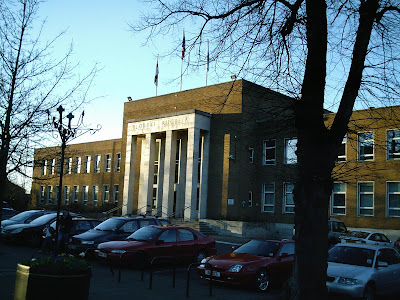
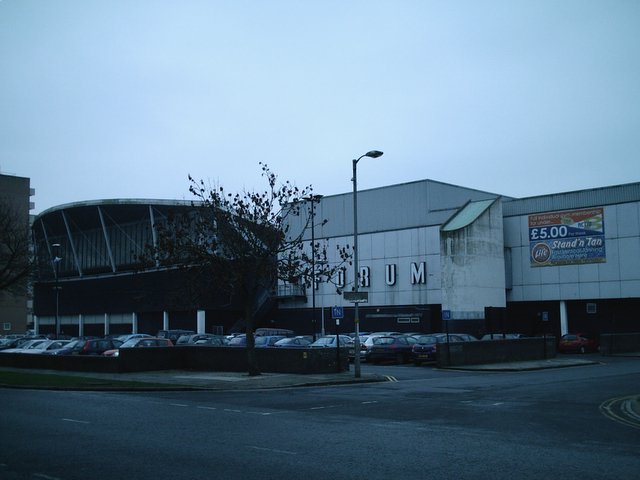
I visited brighton for the day to visit co-op stores around the country towns of East Sussex, Polegate, Hailsham and Heathfield. These were very fine stores. We followed this up by dinner at the Brighton municipal pub, The Sportsman, at the Brighton and Hove Albion ground.

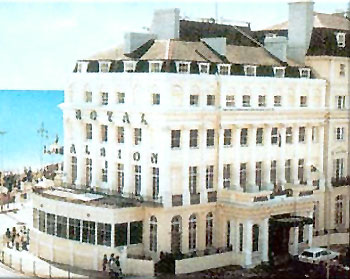
I arrived at the station just as the last train was pulling out, therefore had to stay in the Royal Albion. My nice room had a jacuzzi bath, which I made full use of. In the morning I went to Manchester but that's another story.

19 November, 2006

Brighton


I went to Brighton to celebrate a civil partnership by Mike and Tony. The celebratory party was a great success with friends old and new, with many thanks to Mike and Ken for putting me up at their flat.

The morning after we had a walk through the town around the shops and into the solus George Branch of ASDA. People using this shop and Primark are able to dress very cheaply and very well.

The picture shows the old dairy in Kemp Town

12 November, 2006

Stowmarket

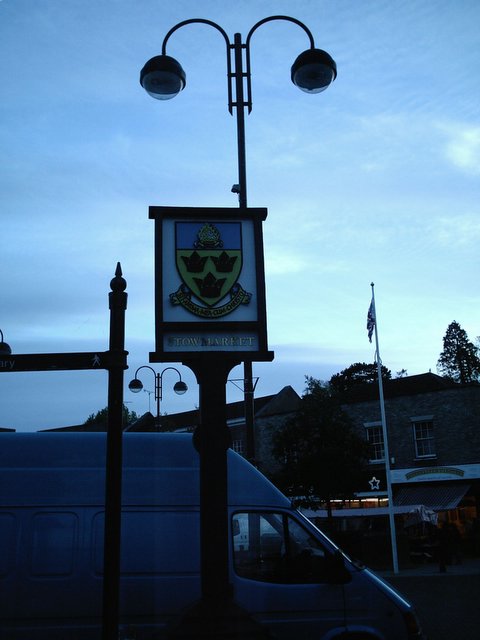
Stowmarket is a little market town in Suffolk with a large church in the centre of town dedicated to St Peter.
Posted by Picasa Stowmarket village sign Posted by Picasa

05 November, 2006

Harlow New Town - Hearts and Essex

Harlow in Essex is a new town, built after the Second World War to a 1947 plan by Sir Frederick Gibberd, who also designed the Lansbury Estate at Poplar for the Festival of Britain. There is a population of around 90000 clustered in villages with a lot of green space surrounding the flats and houses. The first tower block in the country was built in Harlow and this is now listed. The new towns were built in a utopian spirit when people still had faith in the future (the past had been so horrible that faith in the future was needed) and people also had faith in their politicians to to deliver it. As politicians no longer believe they can make peoples lives better (only less worse) so the utopian vision has faded, as have the facilities and bus services. The cinema, where once Harlow’s residents dreamed their big dreams has closed and if it was open you would not be able to get to it as the bus doesn’t run. This is shameful.

The first picture shows the Adam clock overlooking the market place in the Festival of Britain style town centre. The town centre was rather characterised by empty shops, with a considerable number in one block alone. Apparently there are faults with construction of some of the buildings which has led to demolition of some of the town centre buildings and it may be that this block is due for demolition also, although I would have thought a town of 90000 people could support a full town centre of shops. There are a few large hypermarkets on the edge which may explain the lack.


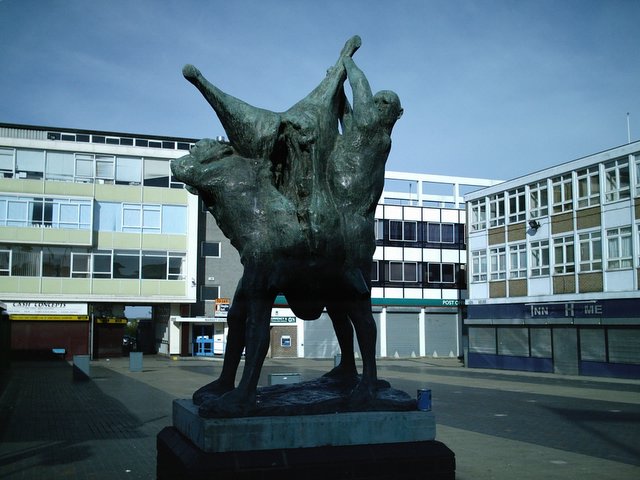
Public art is prominent, and the final pictures show some of the public sculptures. Harlow has the largest collection of public sculpture for any town its size. The first is in the market place and is called ‘Meatporters’ by the sculptor Ralph Brown. It shows two porters carrying an eviscerated pig, which is appropriate for a meat and food market.

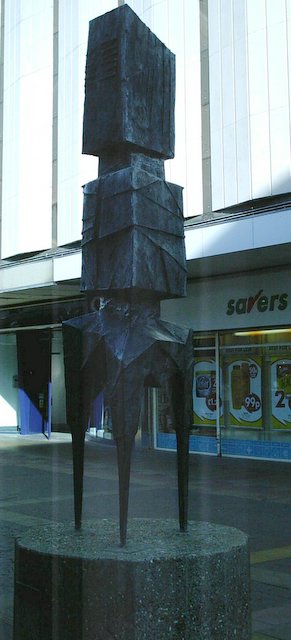
The second photograph shows a sculpture called ‘Trigon’ by the sculptor Lynn Chadwick outside the former Woolworth (although it is not a good sign that Woolworth has left).

Public art gives a sense of place and shows that the cultural needs of the townspeople are not neglected nor are they thought of as philistines.

Posted by Picasa

30 October, 2006

Manchester

I went to Personchester for the Regional Board Conference of the Co-operative Group. The conference was good, I wish I could say the same about the town. Firstly, Manchester is difficult to get to. Virgin trains are around 50% first class therefore second gets very crowded. Often the guards declassify the trains, which is fine if you can't find a seat but if you have a seat in second there's no point giving it up.

When you get to Manchester, the damp climate is also a drawback, and the city centre is in need of considerable regeneration to clean up the former grim industrial buildings. Manchester suffers from low wages and high prices: the price of beer (a good index) being the same as London.

The gay scene always disappoints. The village is now almost totally hetero with only company bar being men only. Council promoted kiss of death.

One picture shows what Manchester is,

the other shows the places where it is preferable to be.

10 October, 2006

London Loop completed. Harold wood to Coldharbour Point.

This was a rather dull walk, and like the Capital Ring, the loop saves the worst until the last. The walk did have its moments, not least the glass of wine I had at the end.

The first point of interest came at Stratford Station where I was complimented on my camera by a young man who had been working all night with a shovel as a pavior. He was telling me how much he had earned with Islington Council, and this was very impressive. Then a very drunk Irishman called Coleman approached (this is 10 o’clock in the morning) who told me he had drunk a bottle of teachers whisky. He insisted I take his photo. He was alternately Irish, English and Jewish and very loud. He and the pavior were turning cartwheels on the station, I suspect the staff thought to leave well alone. The conversation covered drink, narcotics and their effects on the body and mind, pay rates in the building trade and routemaster busses. Coleman got off the train at Forest Gate and I was left with the pavior who was very pleasant and left at Ilford.

From the train I also saw a coal tax post on the side of the railway.

After this excitement Harold Wood was an anticlimax. I bought a Sunday Times (for the free DVD - mona lisa – a good film in spite of Michael Caine being in it) and my lunch. I had to throw the Sunday Times away later as it was too bulky to carry, and I didn’t enjoy my lunch either. Most of the walking at Harold Wood was through suburban streets but Harold Wood Park was quite nice with trees of different colours adding variety to the landscape and a few footballers playing in a Sunday league. Leaving the park into a community forest I then came to a road and walked along into Upminster, past a few delapidated farms one with an old granary on mushroom posts.
At the end of a suburban road there was a woodlanded way leading up past a school and into more suburban streets. Then there were some donkeys in a field and a parade of shops. Following another suburban street I saw the Upminster Windmill and walked along to a sports centre and park beside the Ingrebourne. I carried on through the Ingrebourne valley (dull dull dull) past St Georges Hospital which looked nice, and saw another couple who were doing the loop. Engaging them in conversation this was their second outing on the loop having come from Chigwell.

More deadly dull suburbia and busy road followed. Not sure why the road was so busy as it only went to Rainham but never mind. I did get to Rainham with its lovely and near complete Norman church and its beautiful 17th Century hall. The peace memorial was in the form of a clock. Now had the loop ended at Rainham (after all, it is a loop not a ring) I think everybody would be happy, but it has to go on. The Channel tunnel rail link goes past Rainham so I had to negotiate a large bridge over this and some very unpleasant industrial areas on Rainham Marshes. However the path soon comes to the Thames, and I walked along to the barrier at Coldharbour Point, then took myself back again to a seat where I raised a third of a bottle of wine in toast to the achievement. But like the Ring, I’ll never do the final section again.


01 October, 2006

Chigwell to Harold Wood – Stages 20 and 21 of the London Loop. Muddy Sunday

This walk began with church bells ringing in my ear and ended with a welcome store. In between, I saw some spectacular storms and got soaked to the skin.

Chigwell, if you ignore the modern parts, is a pretty village with an attractive church and inn group, one of the few inn pictures Arthur Mee uses and it hasn’t changed a lot, except that the pargeting has come off and it is now black and white with a chef and brewer sign. There is also a school in mellow brick.
 

One of the morning services had just ended at the church so I went in and had a look round, with permission from the friendly rector. The church was obviously extended in the 19th Century with a new nave and chancel, the old nave and chancel serving as a side chapel. The old nave had a wonderful collection of funeral hatchments and the tower was supported on old oak beams with bells hung for full circle ringing. There was beautiful glass and banners with texts, including “be still and know that I am G*d”. I missed the monument to George Shillibeer, who brought 'busses to London in the nineteenth century but I saw the old brass to Archbishop Samuel Harsnett Primate of England, who had been vicar of Chigwell. He died in 1631 having been denounced for popery after having denounced an aspect of Calvinism. However he was a married man and had also written a book on how to expose those who pretended to be casting out evil spirits.

The church appeared bright and lively with its kindly rector. There were also other old houses in the Village and the Archbishop Harsnett school with venetian windows and mellow brick. The old cottages and shops were straight out of Dickens (who called Chigwell the finest place in the world – it isn’t though). The old inn could play host to Mr Pickwick. I left the village over the fields (remember this is London Transport Zone 6) with the bells of Chigwell church ringing in my ears. I crossed fields and more fields and found the first of the mud. This slowed my progress as my boots became encrusted with mud and the rain started to come down. However this gentle rain was but a rehearsal for the rest of the day and I strode on through the shower. I came into Chigwell Row passing a pony club show jumping field by the little yellow brick United Reformed Church with its dignified manse at the back and graveyard. Chigwell Row overlooks the Hainault forest and that’s all you can say about it really. The Hainault forest isn’t much of a forest but there is an informative visitor’s centre with fish tank, and a beacon. There are some beautiful open spaces for a sunny day out in the country. There’s also a rare breeds farm, however breeds only become rare for a reason, which could be poor eating quality. Although these places were not defended by the Corporation, like Epping Forrest and the south London commons, the LCC seems to have done a good job. We’ll meet the LCC a lot on this walk.

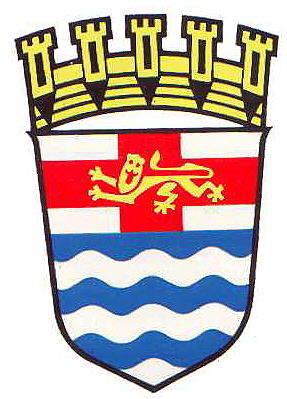
Here is the LCC Coat of arms.


After the Hainalt forest the walk led me through a golf course. At least this wasn’t muddy and the path was well waymarked although being Sunday afternoon there were many golfers about.
I soon left the golf course to cross fields with a view of the towers of Romford. There were many more muddy tracks here. I soon went up the hill to view the light glinting off the top of Canary Wharf Tower like some far off emerald city. The Havering country park began as a large mansion, like most of them did but this was demolished in the depressed years of the 1930s and converted, more or less, into a people’s garden city. People were able to buy plots, sometimes for as little as £5, and would be able to erect bungalows on these plots in the days before planning permission. Usually the bungalows, if the owners had enough money to build them, were little more than huts, but these were part of a fairly strong back to the land and hutment movement in the aftermath of the first world war. Of course the gas, water and electricity companies could not be persuaded to lay on utilities and the plots were often many miles from transport facilities. Peacehaven - perhaps the saddest monument to the 1918 peace - was built in this way, with some of the plots given away in a News of the World competition. Eventually hutment inhabitants, where they never got good title to the land and where there were no utilities, had to be dealt with and the LCC bought the land in the 1950s and turned it into a country park free of development. There are some giant (comparitively small) redwood trees in the park which will grow larger in time.

The next village was Havering Atte Bower, where our kings and queens have walked. The village stocks and whipping post are preserved on the village green but there is no trace of the former royal palace or even the original village church the current one being 19th century. This village is where Joan of Navarre, queen to Henry IV lived. The queen was accused of the heresy of witchcraft, but was never brought to trial, even in those days when witchcraft was a dread reality. Historians believe that money was the motivation, and when needs were not so pressing they released joan and what remained of her money to live out her days at Havering Atte Bower.

Leaving the village I walked through some more muddy fields keeping in view a round tower known as The tea caddy. I suspect it was a clock for the workers in the fields. I came to some ornate metal gateposts which grace the entrance to Pyrgo Park, with its chapel visible later on the path. It was here that the storm finally broke, when I was on a ridge too! I have seen this quantity of rain very few times in my life and the lightning flashes and thunder made me think of Beethoven (the composer not the dog) but I wished I had a dog with me. I got soaked to the skin. It was so wet I could not take a picture of or even properly see the building that looked like Castle Drogo, but perhaps more modern. Eventually I came to Paternoster Lane after slipping several times. This road was more like a river but at the end was the Castle Drogo like house I admired from the ridge. It was very modern. The road led me down to The Bear, a sizzling inn. By now I was thoroughly soaked and ready for a sizzling platter, preferably applied to my backside to dry my clothes. But I made do with a pint and bag of crisps and a blast under the warm air dryer in the Gents. Setting out from the pub I walked down Tees Avenue in the LCC out of county estate, starting to resemble the River Tees, to walk in the little dell where flows Carter’s brook which becomes Paine’s Brook and then the River Ingrebourne. Understandably this was white water rapids after the storms, and although it poured down on the rest of the walk I didn’t notice a thing with the pint inside me. Thank heaven for alcohol, the cup that really does cheer!
Continuing along the proto Ingrebourne (our rivers have Saxon names) I came to the central park of Gidea Park, fine examples of 1950s LCC housing very different for Mr and Mrs Citizen, the first tenants, and their four children from the three attic rooms where the six of them had been crammed together. The neatly designed cottages in traditional style round a village green, with old people’s dwellings at the corners, and new shops being opened by both the private trade and the London Coöperative Society led to these dwellings becoming highly desirable and sought after. Mr and Mrs Citizen now had room to grow, blossom and, protected by their democratic landlord from arbitrary eviction, they flourished. Is it any surprise then, that in the property owning democracy they sought to purchase their houses and did so when given a chance? And as a bonus Mr and Mrs Citizen were given a discount that made the purchase easy. The tenants cannot be blamed for buying their houses. The Government can be blamed for not allowing the council to use receipts from house sales to build replacement dwellings.
  Posted by Picasa

The last open space on the section of the loop was a small grassed area with what looked like a world war two bunker in it. After this there were some boring suburban streets (not LCC alas) but at the end of it all was a former London Coöperative Society shop refurbished to Welcome Format and welcome it was too. I caught the train home from Harold Wood station that had the original name over the door – London North Eastern Railway.
A muddy, soaking but still impressive day. I want to do this walk in fine weather as I expect it would be most rewarding.