15 September, 2008

Ickenham, Ruislip and Eastcote.


No luck with the churches at the end of the Central Line (West Ruislip) but they were quite picture book, with an ancient farm at Ruislip.

13 September, 2008

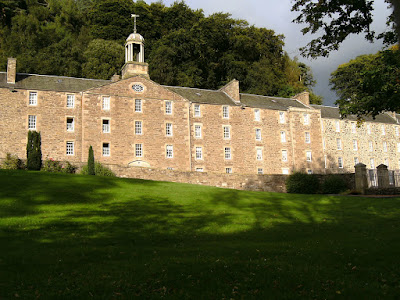
New Lanark and the falls of Clyde

Roaming in the gloaming
On the bonny banks of Clyde

I was in New Lanark for the UK Society of Coöperative Studies conference on Robert Owen.

From richard 2008 sept

10 September, 2008

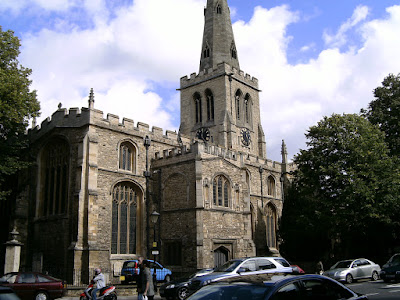
Bedford, Where the Messiah will come again?

Bedford, also known as 'somewhere in England' as that was where the BBC used to broadcast music from during the war years. Why they needed to conceal the location of their concerts is rather baffling- it would have been much better to move them around the country if bombing of classical music - very likely by German or Austrian composers - was seen as a difficulty. Bedford was also home to much of the parts of the Second World War the Government would rather have kept quiet about. However that sort of stuff is not my interest in Bedford.
From richard 2008 sept

Bedford was home to John Bunyan, the 'chief of sinners' in his words in his spiritual autobiography. His sins don't seem very sinful to us who are much more versed in wickedness than Mr Bunyan. He played games on the village green at Elstow, enjoyed dancing and rang the bells in the village church. I've indulged in a bit of tintinabulation myself. I would consider the sin was to those listening to me...
However Bunyan, after hearing a voice say "Wilt thou leave thy sins, and go to heaven, or have thy sins and go to hell?" gave up his sin and decided to live in Bedford. His preaching eventually landed him in the County Gaol as he was preaching without a licence, at a time when to dissent from the Established church was to deemed to be traitrous. Bunyan put his time to good use, making bootlaces to support his family and writing the 'Pilgrim's Progress from this world to that which is to come' a book translated into almost as many languages as the bible, and usually to be found on protestant book shelves even today.

Bedford honours Bunyan and his statue can be found near St Cuthbert's church (closed when I called). The Bunyan conventicle still meets for worship twice on Sundays.

Bedford does not really honour another religious sect that also has its home there. The last of Joanna Southcott's followers form the Panacea Society, a charity which is 'a religious organisation with a belief in the latter day prophets and the Second Coming of Our Lord Jesus Christ'.

They hold Joanna Southcott's box which must be only be opened in the presence of 24 bishops of the Church of England (the full complement at the time of Joanna Southcott) and, not surprisingly, they have been reluctant to assemble to do the honours.
The Society believes that a small piece of cloth in a glass of water may help heal all illnesses. They believe the messiah will return to Bedford.

08 September, 2008

Barrow in Furness

Barrow is an iron and shipbuilding town opened up in the 19th century by the Furness Railway. It is a bit like Middlesbrough but with fewer people.
From richard 2008 sept

From richard 2008 sept

03 September, 2008

Blackpool

There's a famed seaside town known as Blackpool,
That's noted for fresh air and fun.
And Mr & Mrs Ramsbottom,
Went there with young Albert their son.

Well they didn't think much to the ocean,
The waves they was piddling and small.
No shipwrecks and nobody drownded,
Fact nothing to laugh at all.

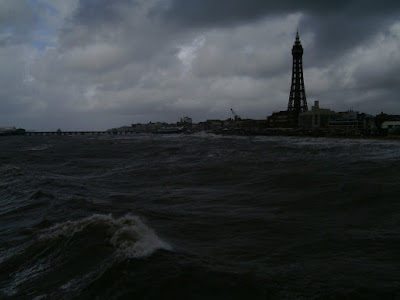
Well the waves were not piddling an small the day we went to Blackpool. The sea was pretty rough.
From richard 2008 sept
No shipwrecks though but the chips in Harry Ramsdens were rather undercooked. and the rain didn't half come down.

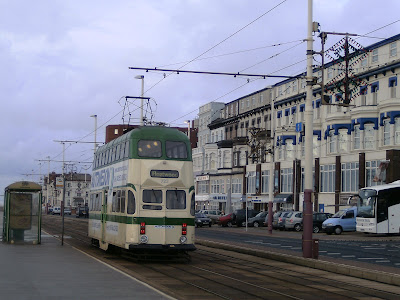
A tramcar ride though and I was happy!
From richard 2008 sept

02 September, 2008

Cartmel Priory and Grange over Sands

From richard 2008 sept


Grange Over Sands is like Switzerland in Morecambe Bay. Lots of chalet bungalows and an aging population give it a decorous but boring air.

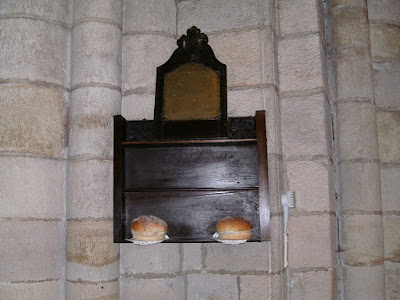
Cartmel has a race course and an ancient priory, the only church where I have seen a bread shelf put to its proper use, and two loaves remaining on it.

23 August, 2008

Great Dunmow - another long way to church

Another meadieval town with a bad bus service: I had to change at Stansted Airport. My mate was also being Mr Grumpy today. After lunch in the Saracen's Head - the chefs interpretation of nouvelle cuisine for the value conscious we had a look round the town.

There is a Tudor town hall and a pond on the village green, which was used by a Mr Lionel Lukin to test lifeboats. Funnily enough the vicar of Romsey from 1860, a Mr Edward Lyon Berthon also designed lifeboats.

I saw an old house at the end of the village with gables and a cupola, but the bust of a woman that Arthur Mee mentions as being above a window has gone, or it is not that house. The church is set a long way from the village but is well worth the little walk. Well proportioned with a fine chancel arch, the church is a lovely space, although the vicar expressed regret that the church had been, as he put it, vandalised in various periods in its history.
There is a unique south gallery over the door (as you can see in the picture) which was originally a guild chapel and then a family pew. Now it is just a chapel in the church
.

17 August, 2008

Southampton (Weston) and Netley

The Weston part of Southampton is across the River Itchen from Southampton, crossing the Itchen Toll Bridge which some see as a barrier and others as a quick and easy crossing into town.
If you're walking you go free. Weston is trying to be a seaside resort with shelters on the rather stony beach on the rather polluted Southampton Water. These have recently been done up with scenes from Southampton's history including the second world war bombing (!) although they lack the old (1980s) slogan of the city 'Southamp-tons more'. My usual walk leads from Sholing to Woolston, down to the shore, up to Netley (more later) and back via Mayfield Park. mayfield park has an obelisk in it bearing the legend 'The earth is the LORD'S and the fullness thereof'. It is a memorial to a whig politician although you'd never know it, mostly just an eye catcher in a bleak part of the park. Mayfield park always seems as though it has a time warp in it because walking through it seems to deliver me with speed to my destination (Thanks Jon and Ray!). It's always much quicker than walking towards it.

Netley is a little village on Southampton Water with a ruined abbey, not as fortunate as Romsey - perhaps they couldn't afford the price if it was the same. Closed at all times except Sundays from 1300-1600 due to antisocial behaviour among the ruins (my mind boggles - What on earth are people doing there?).


The ruins are quite intact as is Netley Castle, once a convalescent home but now a private block of flats with the gardens suitably fenced. Once they were open for all to wander at will.

16 August, 2008

Romsey - Another prosperous market town

Romsey in Hampshire is dominated by its abbey, remarkably intact for a Romanesque church as it was bought for £100 at the dissolution for use as a parish church for the town. As a consequence of this it has no endowments so no money for rebuilding over subsequent centuries.

With only time for the briefest look at the church, including the saxon woman's hair that was found in a lead coffin, all the rest of her having decayed, and the briefest time to look around the town, which is quite dominated by the Mountbatten family (formerly Battenburg)Romsey would no doubt repay another visit.

09 August, 2008

Tottenham Walthamstow and Ilford

Tottenham has Bruce Castle museum within its boundaries, however the opening hours are not for early birds. Wed-Sun 1pm-5pm. So when I arrived at 1100 on Saturday I was disappointed and not really prepared to hang around for another three hours. So I went off to Walthamstow to the William Morris Gallery, which proclaims itself as the only museum dedicated to the life and work of William Morris. William Morris had his childhood home in Walthamstow, when it was nice, and this has been transformed into a museum of his life’s work. This includes furnishing, fabrics, stained glass and wallpaper. The museum also contains pictorial art and a room for temporary exhibitions.

I also went to have a look at Walthamstow Town Hall a 1930s sub totalitarian style building with a pool outside, similar to Rugby Town Hall but bigger with a clock tower and in Portland stone. The technical college next door has sculptural panels depicting activities such as music and swimming that take place (or once did) in the college.

The weather was not promising so I took a bus to Ilford where I got rained on and heartily sick. The Redbridge Borough Museum, which wasn’t bad, displayed a lying notice stating that it’s lunch hour was from 1pm-2pm. On this occasion the museum did not open until 10 past.


Having become sick of Ilford I got on a bus to go back but then noticed that the chapel of St Mary’s hospital, Ilford’s oldest building, was open that day. St Mary’s Hospital was founded as a leper hospital and became an almshouse after the lepers moved out on the dissolution. The flats were made new in 1927, and the chapel was in use as a tea room and market. It wasn’t very interesting.

30 July, 2008

A long walk to church in Reigate


Reigate is a small town in Surrey, which I have visited a few times but been unable to find the church. This time I decided to ask somebody and a very unhelpful woman dierected me first to the methodist church in the High Street. I told her I wanted the Church of England Church and she replied that if I hadn't an address... I would have thought most people would have known where a church was. I eventually found it in Chart Lane, not Church Street, but it was locked up and the church office was closed.

The Priory museum was also closed although the priory park was open. The old Market House is now a cafe nero.

All in all Reigate was a poor mans Godalming

28 July, 2008

East Tilbury: Bataville


East tilbury is a tiny village on the thames Marshes. In the 1930s Bata Shoes built a factory and some dwellings for the workforce there in the modernist style. However, one of the ideals of modernism is supposed to be for form to follow function and for any buildings built in that style that isn't a style to be a model of efficiency for the tenants. Now, according to a planning application in the street of houses, there was a desire to move the bathroom to the bedroom floor, it previously being next to the kitchen. This is not a model of eficiency. The houses look great though.

There is also a statue of Thomas Bata and a Thomas Bata memorial park.

26 July, 2008

Whitstable


Whitstable oyster festival was in full swing as I went there but I don't really like slippery things going down my throat live so I didn't participate in the oyster eating competition. Whitstable has an old fashioned look for the discerning visitor, although they'd have to be to tune out the industrial plants round the harbour, used for the processing of oysters. The Church of St Alphege was running a tea shop when we called and a very good tea it was for under a fiver. The weather was perfect and the stalls enjoyable.
The castle at Whitstable was inaccessible due to a private function but the grounds were pleasant. Tankerton lawns gave a fine view out to the Thames estuary where the windmills were turning to generate miniscule amounts of power. Actually they were not turning at all in the stillness of the day. Picture not too clear though.

25 July, 2008

Godalming - gardens and rabbits


Godalming is a pleasant little market town on the way to Portsmouth just outside Guildford. It is full of buildings from the 17th century when it made its fortune from wool and later from knitting stockings. I didn't feel it was very welcoming to visitors. When I said I'd never been there before most people looked with incredulity, although I have to admit that the staff in the museum were pretty good.

Godalming has had several famous residents: one of the first was a Mary Toft, a servant girl looking for the sort of notoriety that the present day version of serving girls seek on Big Brother. She did her own version of the trick where somebody pulls a rabbit out of a hat although she pulled them out of her... well lets say she gave birth to 16 rabbits. Maybe she had lots of eminent doctors fooled - maybe they were just there for the sight of something so freakish - just like big brother really. Anyway before too long she was exposed as a fraud: a porter had been smuggling rabbits into her room.

Other famous people were Jack Phillips, the radio operator on the Titanic and Gertrude Jekyll, the famous garden designer. She also lived in the town and designed the memorial to Jack Phillips. It is a pleasant cloister with lilly pond, but the planting scheme is rather the worse for wear at present.

Another place in the town is the Royal Court, a modern building built from the materials of old cottages previously on the site. I must say it did have me fooled.

The place is attractive and prosperous and must be a fine place to live.

I took part in the walks around the town, seeing the fine church and old stocking knitters houses etc.
The pictures show a former coaching inn, the Jack Phillips Memorial and Royal Court.

Guildford - mostly the cathedral


Guildford is not the county town of Surrey, that honour falls to Kingston, but it ought to be. There is a fine guildhall, and the impressive church of Holy Trinity built of red brick in the 18th century inspires awe in those who see it for the first time. The church has a light and airy feel with a painted apse that is in contrast to the rest of the building. It must have been refurnished in the 1980s and the woodden chairs do not dominate like bench pews must have, and even those would be an improvement on the 18th century box pews in this space, although not in every space. This church was the pro-cathedral.

Guildford cathedral dominates the town from the nearby stag hill. It's worse getting to than Linoln, and that's saying something. Building began in the 1930s using the clay from Stag Hill for making bricks, the cathedral literally has grown from the ground it stands on, but was not consecrated until 1961. It was in use by the University of Roehampton which states it is in London, so why they use a Surrey cathedral for graduations I do not know. I couldn't get in to the cathedral until later but the place was very impressive inside, pale stone with marble floors in direct contrast to the brick outside. Nice modern glass. The golden angel on top shows the wind direction.

16 July, 2008

Epping to Ongar - and Berners Hall Farm Berners Roding.


Setting out from Epping station to walk to Berners Hall farm seemed like a good idea at the time. I had plenty of time to do it and the weather was perfect for a fairly long distance walk. I would take in a couple of old (one extremely old) churches and be at the farm by the appointed time of 1500. However the walk was slightly longer than I had anticipated and I had to get a taxi for part of the way.

The Essex Way runs from Epping to Harwich and goes for 81 miles through some of the Essex countyrside. The first part crosses a railway bridge and soon enters open fields. The natives were friendly with several calling cheery hellos. Coopersale Street had some attractive houses and I later found out it is a conservation area. Essex fields are very enclosed, where there is livestock with electric fences creating hazards. The worst of this was in Toot Hill Village where an electric fence had been placed across the path, so that travellers had to duck it. I had a shandygaff in the Green man at Toot Hill (more a restaurant than a pub though) before walking quickly on. The countryside was quite ordinary, but on the route was Greensted Church, a saxon church built of wood, that had survived from those days, although much altered. It must be marvellous for the congregation at their Sunday worship to know they are sitting in a building used by saxons. The wooden walls were preserved from decay in Victorian times by having a brick wall placed underneath them - similar to a footing. They also added three dormer windows. The nave roof was tiled in Tudor times which was when the chancel was built in brick. The Tudors also installed three dormer windows. The church is a remarkable survival, and to touch the timber is to touch history.

Eventually it was time to move on past the invisible Greensted Hall (I could only see its garden complete with lake) and walk across the fields to Chipping Ongar, which was known to passengers on the Central Line of the London Underground as Ongar. London Underground seem to have an aversion to the word 'chipping' as the station at High Barnet really serves Chipping Barnet.

Chipping Ongar was where David Livingstone lived for a while, but I missed the United Reformed Church where he preached. I did see the old church of St Martin of Tours. This church had an anchorite's cell next to the altar and remains of ancient work including roman bricks. The 15th century font was dug up in a garden in the town, and restored to the church in 1963.

By the time I had finished in the church it was time to go to Berners Roding, a tiny hamlet and location of the Coöperative Farm.
The Farm Manager spoke about the history and current production of the farm and showed fields of wheat and peas as well as a shiny, new combine harvester. People of my generation and older will now be thinking of The Wurzels!

We were also shown the former church of Berners Roding, completely empty except for two memorials, a prayer desk, stool and pulpit. The church was clearly old (although hard to date) and clearly in a state of decay with the floorboards lifting and cracks in the walls.

12 July, 2008

Hoddesdon to Cheshunt on the Lee Navigation Towpath

A visit to Hoddesdon and Cheshunt in the lovely Lee valley. Getting off the train at Broxbourne, which I passed through on the New River path I went North to Hoddesdon, to find the high street turned into a vintage car rally. There were some interesting cars there including the only half timbered car ever made – the Morris Minor traveller. After a good look at the cars and the elderly band playing popular music of the 50s and 60s it was time to look at the shops and the rather uninteresting 19th century church. Hoddesdon had been divided between two parishes until the 19th century when it became a parish in its own right. Hence the red brick church that I couldn’t bring myself to photograph.

Rawdon House was built in 1622 but was surrounded by trees and hard to photograph. Classic Jacobean house with dutch gables and the coat of arms of Marmaduke Rawdon over the front door. Marmaduke Rawdon was an investor in the New River Company and had a fountain in his garden fed from a conduit, as did several other Hoddesdon houses. Most of these seem to have been removed. There is a sundial on the wall of Rawdon House.

Having escaped the cars and the rain I headed down to the station again to walk by the Lee Navigation.

Having escaped the cars and the rain I headed down to the station again to walk by the Lee Navigation. My intention was to have a 2 ¾ mile stroll to Cheshunt, although Cheshunt as it turned out is a long way from the Lee and its railway station.

Walking by the lee is pleasant and less boring than the New River as there are boats going up and down. There are locks, including a lock on an aqueduct which was interesting.

When I got to Cheshunt the station is located a long way from the main shopping area. The shopping area was dominated by a fountain which was in full play. There was a pleasant court of almshouses on Turners Hill and a typically Festival of Britain block of flats on the High Street

But despite walking up Church Lane I couldn’t find Cheshunt Church, which was a bit of a disappointment. All in all a good day out.


11 July, 2008

Regent Street Polytechnic

Founded by Quintin Hogg to give a muscular christian education to the working classes, where physical and mental development had equal priority, it is now just a university. The pictures show the old cinema and St George and the dragon in mosaic.
Posted by Picasa